Sal’s death
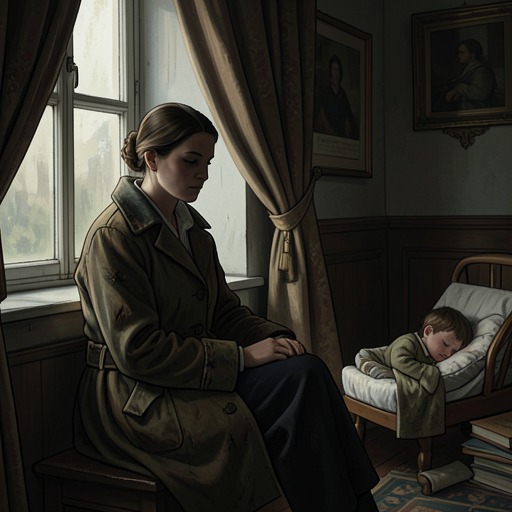
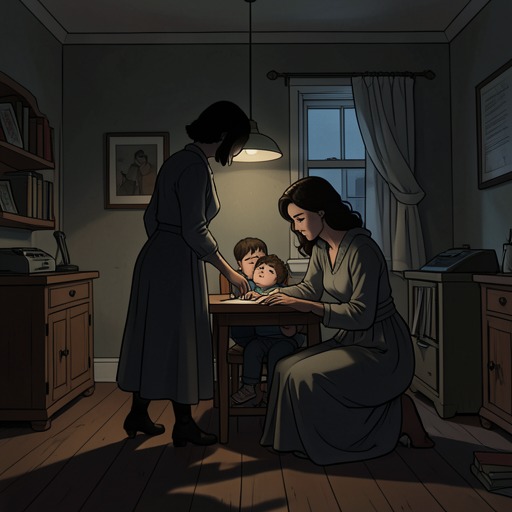
Klara and the SunSal’s death, though recounted rather than shown, remains an active presence in the family’s life. Josie describes Sal as her sister and recalls that she died after becoming sick with an illness worse than Josie’s own. The loss also haunts The Mother: a well-meant prediction that Josie will recover prompts her to ask whether Sal would have wanted to thank her, and later she warns Josie against making promises her sister could not keep. The death thus gives the family’s hope for Josie a history, turning reassurance into a difficult encounter with grief and uncertainty.
The Death as a Family Memory
Sal’s death enters the story through photographs and conversation, not through a narrated account of the illness itself. While looking through a box of prints with Klara, Josie identifies a girl pictured with herself and The Mother as Sal, her sister. Asked where Sal is now, she answers simply that Sal died. She says she was small when it happened and does not remember Sal much; she adds that she does not miss her. Her measured response sets a limit on what she can personally recall, rather than erasing Sal from the family’s history.
When Klara asks what happened, Josie explains that Sal became sick, but stresses that it was not the same sickness she has. Sal’s illness was, in Josie’s words, much worse, and that was why she died. The distinction matters to Josie: she is living with serious illness herself, yet resists treating Sal’s death as a prediction of her own. After explaining, she gathers the photographs and puts them back in their cardboard box. The gesture closes the immediate inspection of the images, even as the conversation makes the absent sister newly present to Klara.
A Place Shared with Sal
Morgan’s Falls carries a particular family history. The Mother tells Klara that she and Josie came there with Sal, and asks whether Josie has explained how much Sal loved the place. The falls are therefore not only a destination Josie remembers fondly; they are also a place tied to earlier family outings and to a daughter who is no longer there.
The Mother recalls a photograph taken by Melania at a bench near the falls, showing herself with Sal and Josie. That remembered image gives the place a concrete link to the family’s earlier life: the three of them once sat together there, and Sal’s presence survives in a photograph and in The Mother’s recollection. Josie’s account of enjoying trips to the falls and The Mother’s emphasis on Sal’s love for the setting are not contradictory. They show how a shared family place can hold different memories, including the happiness of outings and the sorrow attached to someone who died.
The Mother’s Grief and Guilt
Sal’s absence surfaces painfully in a conversation with a woman who, after seeing Josie looking better, predicts that she will be fine and says Josie will one day be grateful to The Mother for her courage. The Mother responds by asking whether Sal would want to thank her. Her question redirects the optimistic exchange toward the loss that it has left unspoken. The woman bursts into tears, apologizes for speaking thoughtlessly, and admits that the story of the nice boy seemed unfair; she addresses The Mother as Chrissie. The Mother reaches out and hugs her, allowing the apology and the grief it has stirred to meet in a gesture of comfort.
Later, as Klara and The Mother talk about Sal, The Mother describes the sisters by contrast. Josie says what she thinks without worrying much about saying the wrong thing; this can irritate The Mother, but she loves her for it. Sal, by contrast, thought everything through before speaking and was more sensitive. The Mother wonders whether Sal handled being sick as well as Josie is handling her illness. Her comparison does not settle what Sal’s experience was; it makes clear how her memory of Sal’s temperament remains bound up with the question of how her daughter endured being ill.
When Klara asks why Sal died, The Mother’s expression changes, and something cruel appears around her mouth. That reaction interrupts the conversation before any explanation follows. The narrative gives no medical account of Sal’s illness and no answer to the question of why she died beyond Josie’s statement that it was worse than her own. The withheld explanation matters: the family can remember Sal, describe her, and return to places she loved, but the precise circumstances of her death remain beyond what this exchange discloses.
Sal’s Death and Josie’s Illness
The loss becomes an immediate conflict between The Mother’s fear and Josie’s confidence when Josie tells her that she will get well soon and knows how it will happen. The Mother challenges the certainty behind that promise: Josie is a child who loves life and believes everything can be fixed, but Sal made promises too and could not keep them. Her words bring the dead sister into the present not as a vague caution, but as the reason she cannot accept Josie’s assurance without fear.
Josie answers that Sal was sick with something different and insists that she herself will recover. The Mother asks her to explain how. Their exchange holds two positions side by side without resolving them: Josie distinguishes her future from Sal’s, while The Mother hears a familiar promise shadowed by the earlier loss. Sal’s death therefore shapes the emotional stakes of Josie’s illness, but the evidence does not say that the sisters had the same condition or that Josie’s outcome is predetermined. The distinction Josie insists upon and the resemblance The Mother fears remain in tension.
Significance
Sal is characterized indirectly through surviving traces: a photograph, her family’s memories of trips to Morgan’s Falls, and The Mother’s account of her cautious, sensitive manner. Josie’s limited recollection makes her death feel distant to the younger sister, while The Mother’s response reveals a grief still capable of breaking through everyday conversation. These differing perspectives prevent Sal from becoming only a warning about illness: she was a loved daughter and sister with a distinct personality and attachments of her own.
The recollections also give hope a cost. The prediction that Josie will recover is intended as comfort, but The Mother’s question about whether Sal would thank her exposes how confidently offered reassurance can reopen grief. Later, her reference to Sal’s unkept promises makes hope itself feel dangerous, even as Josie maintains that her case is different. Sal’s death is consequently both a past event and a pressure on the family’s present: it informs how they remember, what they dare to promise, and how differently mother and daughter face Josie’s uncertain future.